Monday, July 2, 2012

An Idle Sunday


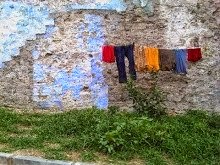
Photo found in Dr. El Sadek's memorial page. 


Death is a funny business, indeed it is. At some point it becomes less about the 'loss' of the deceased and more about how 'we' feel about the space he/she leaves behind. We keep thinking about how 'we' are going to survive the next minute, day or even year without him/her,how we will be able to champion our next smile, hold back the tears, and go on with our daily pursuits of happiness and eternal greatness.

Death indeed is a funny business. 

Yesterday, I and I can only speak about myself with such certainty lost the possibility of walking into the office of a man I've always respected and loved. I lost the chance of engaging with him in a conversation about education in the Middle East and what I, the once scared, almost-crying student that walked into his office in 2001, think of the world post-graduation. 
I, lost a potential of a good conversation and a warm smile that could have possibly renewed my faith in the education system. 

Like the university's buildings, and strong concrete pillars, I've taken Dr. El Sadek's presence for granted, at the back of my head, there he was with my friends and loved one. Granted! That's what he was, yes I did plan to go see him again once I am done with my crazy schedule, perhaps this week, or the week after. Or maybe, I wanted to visit AUS again during the fall, when the weather was more tolerable. 

Yes, I planned to visit Dr. El Sadek at some point in the near future, without even considering for a spilt of a second that this plan might not fall through. 

Death is a funny business because it remains to be the one uncontested truth in our lives, everything else seems to be debatable, even GOD is debatable nowadays amongst the enlightened  elites, but death is never argued, not for, and not against. 

Death, the one constant in our lives, the truth that never changes, never evolves, is always denied and ignored. We have a beautiful and scary way of ignoring this truth, striving hard to achieve immortality, be it through our words, our photographs or our work, we all ignore death so well that when the news of one of us passing 'away' comes, it shakes us to the core. 

I have been blessed and cursed with the daily reminder of this truth through personal losses of my own that have shaped my whole being. Every night I sleep scared that I would wake up to a quit(er) house, a phone number that is no longer in use, and a Facebook page that is no longer active. Every day I wake up naively rushing to the living room to make sure that both my parents are healthy and awake, and that my phone is buzzing with messages and missed calls from siblings and friends.

But in the midst of all this traffic of ideas and fears, I forget to worry about a person or two, and then comes an idle sunday when you wake up on the news of their passing. 

No matter how good I think I am in preparing myself, Death comes and reminds me that we are indeed, never really prepared. 

So here is to my naiveity, and to all the people I lost along the way. 

And here is to Dr. El Sadek, may you rest in peace and forgive me for forgetting to worry about losing you as well. 

Friday, June 29, 2012

on kitkats, Kirkuk and the meaning of Iraqiness


Speaking on my complicated relationship with kitkats, and Iraqiness. 

Wednesday, June 20, 2012

on sound bytes, baghdad and first times


Below, is my first attempt at speaking my own words. I am quite new at this 'embedding' thing, but here goes everything.


Sunday, March 18, 2012

The Poet & The Scientist 1.1


They left their foreign cities, and forged digital alliances to meet in the epicenter of their colonised past. She packed the innocence of her scarred life, the poetry of her ancestral belonging, and he traveled light, burdened with his manufactured convictions.

He came with numbers and diamonds, and she welcomed him with extremes of veiled chocolates, cigarettes, and her words.
In the express train, there it was: collisions of shock and anticipated pleasures as they waited to reach the centre of what they once both called home. The conversation was just about to start, but the debates were silenced, the binaries were resting, and the potentials heightened.
The conversation continued, and foreign music played in the background to remind them once again, that it was indeed all foreign, all but their coveted explosion.

Laughter, tears and music all seemed wordless at a moment when her words were silenced and his numbers were subtracted to zero. Musky scents of occupied pasts in a room that witnessed the death of poetry and the abortion of science.
He tasted pleasure, she suppressed pain and both surrendered to a moment they knew will last for as long as… a moment does.

He watched her words fall asleep, and her defenses fall as his lips stretched with a small victory that he concurred her lands, and claimed them his. She slept to dream of her words again.
Outside the small window was the remains of an empire that insisted on stealing their belonging. They denied it with the smell of coffee, fresh bread and cigarettes stealing with pleasure moments of their lives. Outside that window, was the empire, but inside the room was Baghdad.

Baghdad: loved, hated and coveted stood uncontested in her eyes, Tigris flowing signaling him to taste home, and begging her to quench her thirst.. They both swallowed home to the point of rejection.
In Baghdad, the explosions went silent too, and the unfamiliar sound of peace alarmed them that it was too, coming to an end.

The music faded away, and the conversation rested to give space for a debate that mocked the rivers and the sweaty palms. His numbers increased, as her poetry resurrected: Words he tried to erase, and softness that suffocated his resistance. He screamed for proofs, as she scribbled words on sheets that witnessed her demise.

She wore her contradictions and he fixed his emptiness as they left for the train. Quite they were, but the silence has left them. He took a glance back at the building that welcomed their wreckage, while she held his hands preparing to let them go.
She was the poet, and he was the scientist.

Monday, November 14, 2011

Platform 12

She ran down the steps, whispering to herself “I am free”... She did not understand how she almost flew off the steps: Light, that’s how she felt.
“ I am free” she kept repeating it, trying hard to remember all the beautiful slogans she read about freedom, all the songs she chanted as a child, all the synonyms related to that glorified word, she remembered none. She instantly thought of Kundera’s story, and how finally she was beginning to understand what he meant when he called it “the unbearable lightness of being”.
She was not running to the station anymore, she was flying. She did not look back, not even once. Was she tempted? Maybe.
“What if I miss the train? What if I reach the station to find it empty? Where will I go?” Home, she thought. A funny word, a phantasmagorical place rather. No, there is no home. She kept running, she could feel the slow loss of breath, but she did not slow down, she couldn’t now. Not anymore.
The distance between the bench and the station was not long, the station was not far. “Where will I go?” And then she smiled thinking to herself that this is everything she ever wanted; this is what she read in books and often imagined as her life. Running free in the cold streets of south London, homeless men begging for money and cigarettes, strange women and men drinking to forget, in the distance jazz music playing... This was it, this was her book, but she was no longer reading it.
The station is there, but her solace was behind. The station was too close now, it is time to look back, and maybe the bench can still be there. It wasn’t.
She reached platform 12, but it was the wrong platform, it did not take her home. She knew that, but she jumped on the first train 40 seconds before it departed. She knew the destination was unknown, but she took the train anyway.
On the seat, beside a man who looked happy with his poppy, and disgusted with the world in his paper, she began to breathe again. The music in her head began to fade away, her voice stopped narrating. It was all quite, it was light again.
He looked at her with eyes of wonder, and asked: “you smell really good, that is you right? It’s like I am in a meadow?” She nodded “Yes, I am the meadow.” He smiled and continued reading his paper. She looked away, and her heart started beating again, she was going nowhere, where will she sleep tonight?
His phone rang and all he said was “I am running a bit late, but I will be home soon.”

Thursday, July 7, 2011

Talbot Square

In a little square by Sussex Gardens in London, two young girls played all day finding pleasure in the littlest things. Amazed by the great weather they were not accustomed to, Talbot Square in London became their haven: trees, grass and benches. It was situated right next to the motel, in which they stayed in with their parents and their baby sister who was too young then to play with them.
I heard this story several times from my Rasha and Tamara, who spoke about London with such love and warmth, and that square in particular. I knew that one day I will visit London just to see what Talbot was all about. Years passed, we grew older, and Rasha got married. She left the nest, and went back to the homeland with her husband.
Some more years passed, and on an idle Friday we received a phone-call from Iraq telling us of her death. I remember this day clearly like I remember what I had for breakfast today, the details of what my mother was wearing, and the smell of freshly cooked Iraqi lunch from the kitchen. I remember that my hair smelled like the new Johnson's baby Shampoo, a product I never used since then.
Fast-forward to year 2011, and 9 months into my life in London, I finally found the courage to visit that square in Paddington. I went there with so many high expectations, and excitement that I will be visiting this magical place my sisters believed was the best place to be in the city. To my pleasant shock, the square was less than ordinary, a very small green piece of land situated in the midst of motels and dark old ugly buildings. I looked around trying to find the ‘scary’ lion statue they often spoke of, and there it was a tiny statue of a gold and red colours right next to the square.I sat on a bench, and took a deep breath. I was a bit disappointed to tell the truth, and a little bit angry as well. I couldn’t quite understand why the anger when I believed that I would be smiling like in the end of a movie when the heroin visits her sister’s playground and makes a little prayer for her. The feeling of serenity escaped me, and tears started suffocating my eyes trying against my own will to leave. It was when one managed to escape my control that I realised that all I wanted to do was to pick up the phone and scold her for such exaggerated description of the square. I realised how much I wanted to have her number saved in my mobile phone, you see she died well before technology took its toll on us. Oh wait, she did manage to see my father’s first mobile phone, you know the big black block back in the 1990’s. Oh yes, I remember she laughed calling us privileged elites, since she lived in war-torn Iraq now; food and security is what she worried about.
I found myself wondering if my sister would have had a blackberry, she had to. I would send her images of myself in every spot in this city, she would have loved southbank, and would probably reply with a crying face wishing she was there with me. She would also send me a message late at night to check if I was ok, you see she loved playing mother so much reminding me all the time that she changed my diapers. I would also send her an image of the so-called great square and laugh at her lack of imagination. I started thinking about her Avatar, she wasn’t the type that changes her picture every day, or maybe she was I don’t know, I will never know.I will never know! There, right there I started to let go of my tears and surrendered to crying. I was laughing and crying at the same time thinking about the absurdity and beauty of the human mind: the mundane details that help us survive.
It has been a while since I’ve cried for you Rasha, not because I haven’t had the urge, but because like everybody else, I pretend that death becomes easier by time. You always used to annoy us with your constant ego-trips: “ How much do you miss me? How much do you love me? Am I your favourite sister/daughter?” we used to always nod and ignore you.

But here you go Rashawi, I am not ignoring you anymore. I love you more than you can ever imagine, your absence has made you my favourite sister, and mom’s one and only. I miss you so much and the thought of not messaging you in the middle of the night scares me still. Oh how I wish I can tell you about my life in London, and about my good grades. I wish you can tell me again how special you think I am, and how different you thought I was from everybody else. The day you died, you took something away from me that will never come back. This pain of losing you has raised the bar so high for other mediocre pains in my life; nothing can break me like your absence did. Even your death made it easier for us to endure other pains, you were right Rashawi,
mako mithlich*.
I will visit Talbot again, look at my phone and think of you.


*mako mithlich: Iraqi for ' there's no one like you'.

Tuesday, April 5, 2011

Egyptian Revolution did NOT start in Silicon Valley, CA.


On March 30th, the frontline club and in association with BBC Arabic hosted a special panel titled: Protest, Technology and the End of Fear. The event hosted Alaa Abdul Fattah, famous Egyptian blogger and political activist, Manal Hassan, activist and co-founder of the Egyptian GNU/Linux Users group, Sam Farah, Presenter of BBC Arabic Nuqtat Hiwar (Talking Point) and Louise Lewarne, who lives in Egypt and is the founder of occupiedcairo.org

The second panel hosted Khalid Abdalla, Actor and political activist (you might know him from the Kite Runner), Dr. Omar Ashour, lecturer in ME Politics and the director of the MA in the Middle East Programme in the University of Exeter, Omar Robert Hamilton, British-Egyptian (hyphenated identity) film-maker and the founder of the Palestine Festival of Literature, and Salma Said, an Egyptian activist, and a member of the Kifaya political movement in Egypt.

The event started with the first panel discussing the so-called role that technology played in what is now called the #25Jan revolution that led to the ousting of President Mubarak. The event was organised in a way that invited the audience to actively participate in the conversation, which was interesting and did add a certain edge to the dynamics of the panel discussion. The speakers were first asked to say several words about what they thought of, or would like to discuss, and the audience then led the steer of the conversation. The moderator I argue was very excited at the notion that facebook and twitter played a vital role in mobilising the masses in Tahrir square, and even directed a question at Manal about how she saw technology playing out in Tahrir. Manal disregarded the notion immediately and assured the moderator that technology had no presence in the spirits of the people standing and chanting in Tahrir square. She did not disregard the importance of sharing information about what was happening, but refused even the slightest hint that social media did play a vital role in the success of this revolution. Alaa agreed with her, and explained that Egyptians used their voices (and clubs and rocks whenever they needed to defend themselves against the aggression of the police) more than they used technology. Indeed, in the panel that was aimed at discussing technology and revolution the speakers did not want to discuss facebook and twitter.

This was supported by a member of the audience, who shared my views when he stated that the western excitement about the technology being part of this revolution was indeed their way of wanting to be a part of a democratic uprising that needed no intervention. I shared his sentiment when I compared how the theorizing of social media and democracy nowadays mirrors the US excitement about the Samizdats being responsible for the dissolution of the Soviet Union and the end of Communism. I mean who could forget Hilary Clinton’s infamous speech on the 21st January 2009 when she compared the internet to the Samizdats and declared it the tool for the oppressed against authoritarian regimes. Of course I must note that my comment/question about the political ramification of the fall of Baghdad during the American and British led war on Iraq in 2003 on the Egyptian revolution was met with enthusiasm from the panellists, and rolled-up eyes from the moderator. I guess the fact that the conversation with the audience did shift to the political impact of the revolution did interfere with the already set-agenda to link technology and the Egyptian revolution together.

Alaa actually made an interesting comment following my intervention, and discussed how the protests that went out on the streets of Cairo ( opposing the war on Iraq) in 2003, and were harshly oppressed and stopped by the police, led eventually to the formation of several dissident political parties. Alaa intelligently realised that the potential of the question was important, since Egypt’s democracy was established bottom-up, and not like Iraq, which saw its so-called democracy brought on American tanks, and British jet-fighters.
One of the most fascinating comments was made by Sam Farah, who took the liberty on behalf of the whole Arab population in the world to declare Arab nationalism dead. Alaa interrupted and asserted that during the whole time in Tahrir square, the chants were: Cairo first, then Jerusalem. As soon as the panel ended, Alaa tweeted:
The siege of Gaza will fall, gas will stop flowing, camp David will be renegotiated so Egyptian army can be deployed in Sinai, promise.

The second panel was more involved in discussing the future of Egypt and the political development post the revolution. All of the speakers shed the light on the possibilities of change and development in Egypt now. Omar Hamilton was very precise when he rightly assured that the democratic developments in Egypt must not be linked to neo-liberal economic policies, that link he considered to be ‘dangerous and wrong’. Khalid Abdalla stated that the best support Egyptians can give to other uprisings in the world is by succeeding in their efforts now, and that what is happening now will determine the real success of this revolution. The discussion of course led to the Muslim Brotherhood involvement in politics, which triggered a question from an audience member to Salma Said about the involvement of women in the revolution in Egypt. Of course, anyone who knows anything about the West’s fetishism about burdening the national discourse with feminist theory can predict the moderator’s then interrogation to Salma about who the women were that participated in the revolution, at some point he asked her: who are they? What are their names? Can you name them? Salma was obviously shocked and just simply answered, of course there were. And indeed, there were many, and the way that the moderator went about questioning Salma was heavily orientalist to say the least.
The event ended with a rather strong sentiment and question by an audience member that we later on find out that he is Khalid Abdalla’s father, who asserted the importance of having a leader to challenge the already existing powerful parties that are seeking to take power from the revolutionaries.

The event was successful in reframing the Egyptian revolution in terms of social mobilization and economic reform, and disregarding the utopian fantasy that silicon valley in California had anything to do with the millions that marched all over Egypt asking for change.